
A Tornelo Case Study on Growing Online Chess Tournaments with the Right Pairing Program
When most teenagers were filling their spare time during lockdown with social media and video games, Michael Ooi was building a thriving online chess community.
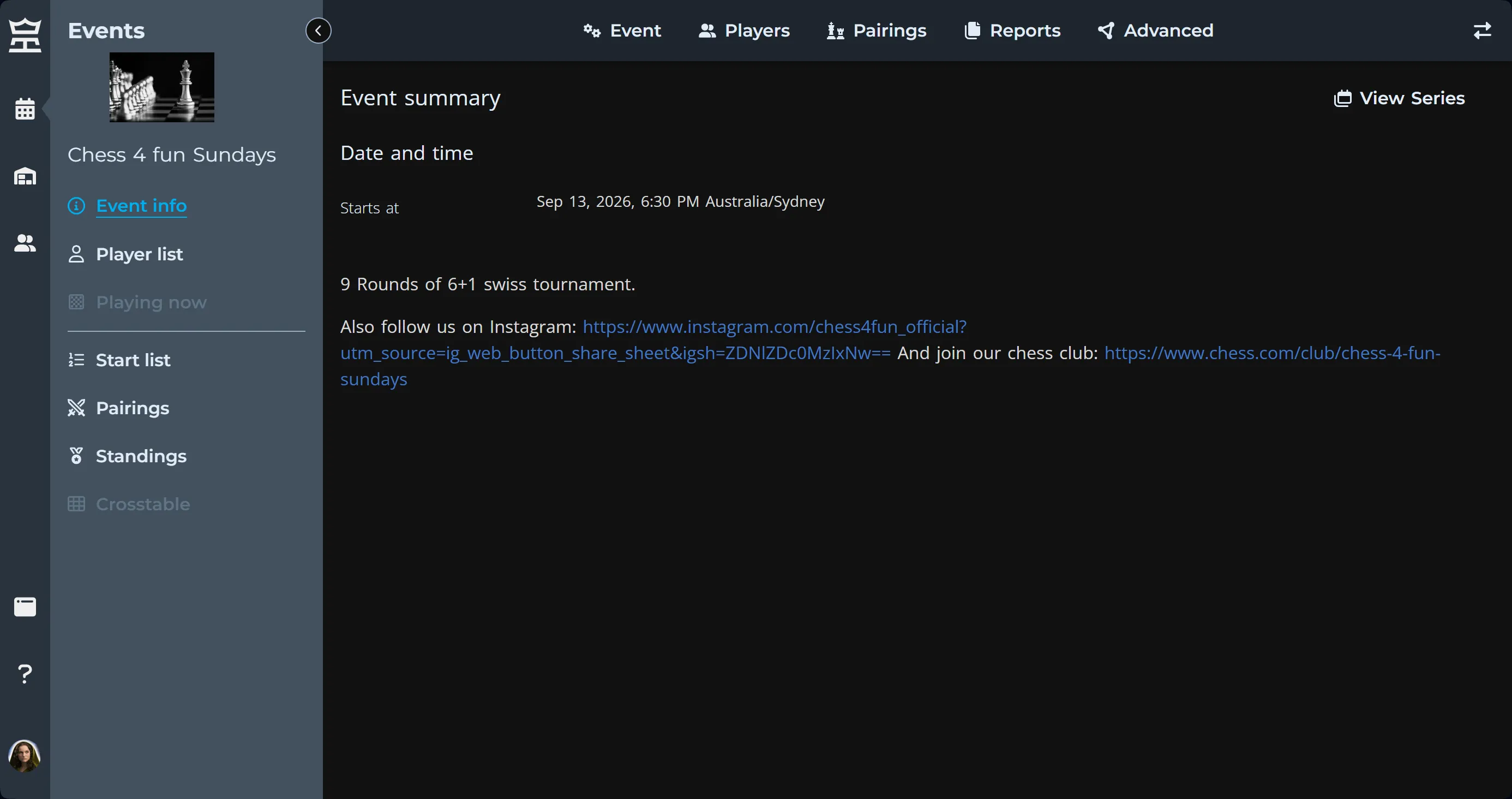
At just 14 years old, Michael is the founder of “Chess 4 Fun”, an online tournament series run on Tornelo, a leading online chess tournament pairing program and chess event management platform. What started as a casual event for school friends has grown into a community of more than 600 registered players, with tournaments attracting up to 80 participants in a single event.
This is the story of how a young organiser used Tornelo to create structure, fairness and connection — and what other chess organisers can learn from his experience.

Michal during our interview
From Player to Organiser: The Beginning of “Chess 4 Fun”
Michael had been playing chess for years before discovering Tornelo. During COVID lockdowns, he and his friends began playing online more frequently. A friend introduced him to Tornelo by inviting him to play in an existing event.
“I think it was quite user-friendly… it was quite easy to move from chess.com to Tornelo as well.”
After playing regularly in tournaments for nearly two years, Michael noticed something missing: his friends wanted to compete together — but there was no structured space for it.
So he created one.
“A lot of my friends wanted to play with each other… so I just created a Tornelo event and got all my friends to join.”
What began as a one-off friendly competition quickly became a weekly ritual.
Why Tornelo? Choosing the Right Chess Pairing Program
With several chess platforms available, why did Michael choose Tornelo to run his tournaments?
Two reasons stood out:
- Simplicity and familiarity
- Scalability for larger groups
“The interface is just much more… easy to use. And I was quite used to using it as well. It’s probably much better for a larger amount of people.”
For organisers, the difference between casual play and structured competition lies in the tools. Tornelo provided:
- Swiss pairing functionality
- Automatic pairings and round management
- Fair play reporting
- Digital trophies and awards
- Spectator mode and live boards
- Email reminders
- Easy event creation
For a young organiser juggling school, Tornelo’s simplicity was critical.
Building a Community: From 30 Players to 600
Michael officially launched his organisation, “Chess 4 Fun,” in mid-2021 with help from his dad. Initially, tournaments included students and teachers from school.
The early numbers were promising:
- ~30 players per event in the first few months
- Weekly Sunday tournaments at 6:30 PM
- 5+2 time control, 7 rounds
Over time, growth accelerated.
By leaving tournaments public on Tornelo and relying on word-of-mouth marketing, the community expanded organically.
Today:
- The organisation database includes 600+ players
- The largest tournament reached 80 participants
“Leaving the tournament public has given people… just joining the tournaments. So now we have a database of 600 people.”
Michael’s marketing strategy was refreshingly simple:
- Word of mouth
- Sharing with online chess contacts
- Family networks
- Email reminders
No paid ads. No complex funnels. Just consistent events and positive player experience.
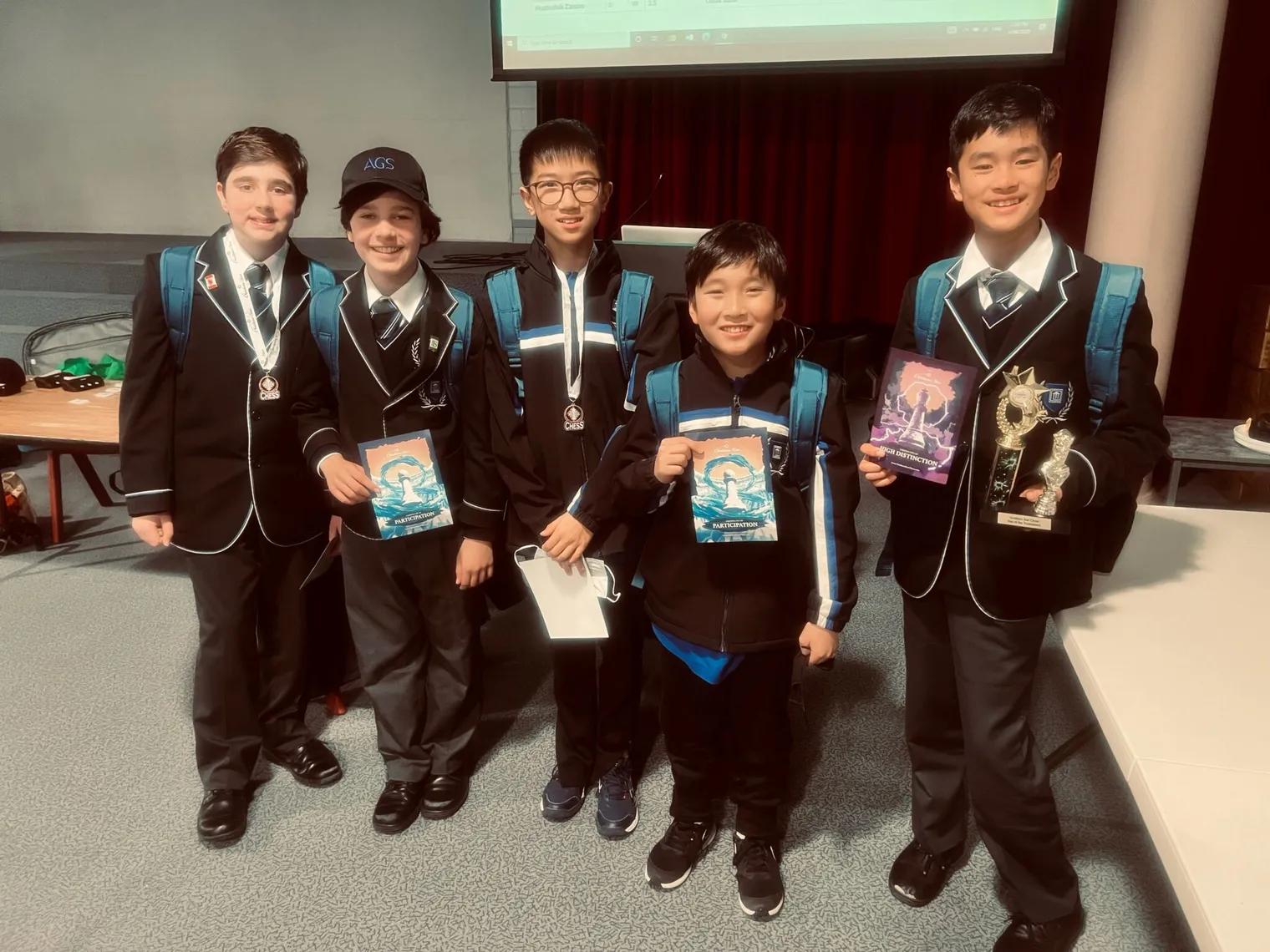
Michael (right) with his Alphington Grammar School teammates.
Managing Fair Play with Confidence
One of the biggest challenges for any online chess organiser is fair play.
Michael faced this early on, especially as events grew.
“There has been some issues of people using computer assistants… but the tournament has a feature where it shows you a fair play report.”
Tornelo’s fair play report allowed Michael to:
- Monitor player accuracy
- Identify suspicious results
- Reverse results if necessary
- Have informed conversations with players
“If the Fair Play report says the player is playing better than Magnus Carlsen… we’ll reverse the results.”
Rather than relying solely on automatic bans, Michael prefers a balanced approach:
“If it’s blatantly obvious, then probably it could be automatically banned. But if it’s borderline, you can talk to the person.”
He also reviewed Tornelo’s tutorials to better understand the system — a reminder that organisers who educate themselves run stronger events.
Adding Social Interaction to Online Tournaments
Michael didn’t want his tournaments to feel anonymous.
To increase engagement, he introduced:
- Zoom and Microsoft Teams calls
- A Discord server for troubleshooting and discussion
- Post-game analysis sessions
“Sometimes near the end of the tournament we’ll help analyse people’s games if they want us to look at it.”
One particularly rewarding moment:
“One of the players… started doing calls all the time. They helped me in the Discord server and became a moderator. Now they also help manage the tournament.”
This highlights something powerful: strong communities produce future organisers.
Leveraging Tornelo Features to Enhance Player Experience
Michael actively uses Tornelo’s evolving features to improve events.
Favourite features include:
- Spectating games
- Auto moves and auto promotion
- Piece count display
- Compact game page redesign
- Digital trophies and awards
He awards:
- 1st, 2nd, 3rd place
- Biggest rating increase
- Biggest upset
“I think they’re quite happy about it… even though it’s just a digital trophy.”
Small recognition mechanics can dramatically improve player satisfaction.
Evolving the Format: Listening to Player Feedback
As the community matured, Michael adapted:
- Split tournaments into rating groups
- Considering longer time controls
- Exploring season-long standings
- Thinking about finals formats
- Considering paid entry in the future
“The main focus is just to grow the size of the tournaments before making people pay.”
His approach reflects a key principle for organisers:
Focus on value and community before monetisation.
Lessons for Chess Organisers
Michael’s journey offers clear, actionable insights:
1. Start Small and Consistent
A weekly tournament builds rhythm and expectation.
2. Play Before You Organise
“I’d suggest playing a couple tournaments first… just to get used to the layout.”
Understanding the platform from a player’s perspective makes you a better organiser.
3. Use Fair Play Tools Proactively
Review reports, educate yourself and communicate transparently.
4. Make It Social
Add Discord, Zoom or analysis sessions to differentiate from anonymous blitz platforms.
5. Recognise Players
Digital trophies, upsets and rating gains matter more than you think.
6. Grow Before Monetising
Build trust and engagement first.
Beyond Chess: Skills for Life
When asked what impact organising has had on him, Michael reflected:
“Management skills… communicating with people and networking… It’s really good to meet people who also really like chess.”
Running tournaments isn’t just about pairings and standings — it builds leadership, communication and organisational skills.
The Future of “Chess 4 Fun”
Michael doesn’t have a five-year business plan.
He simply enjoys running tournaments.
“It’s just a really simple system and I just enjoy playing with people in real time and getting to know them.”
With a 600-player database and growing events, the foundation is strong.
Whether he introduces seasonal standings, longer formats, or hybrid events in the future, Tornelo remains the backbone of his operation.
Ready to Run Your Own Online Chess Tournament?
Michael’s story proves that you don’t need a large budget or years of experience to build a thriving chess community.
With the right online chess tournament pairing program, clear structure, and consistent events, growth follows.
If you’re a coach, club leader or community builder looking to run:
- Weekly Swiss tournaments
- Hybrid events
- Rating-group competitions
- Seasonal leagues
- Youth tournaments
Explore how Tornelo’s chess event management platform can help you launch and scale your own community.
Start small. Stay consistent. Build something that players want to return to.
Just like Michael did.